Interview with Martin Storbeck, Founder and CEO of STARK Group GmbH
This interview provides insights into the founding story, company philosophy, approach to technology and AI, and the culture that defines STARK Group.
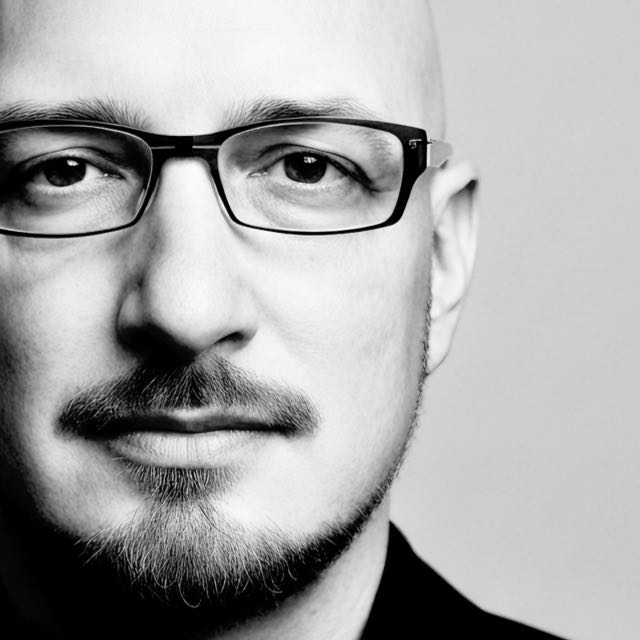
My journey with STARK Group began in 2015, but the story of its founding is perhaps more interesting than the date itself. It all started within various Mercedes projects where a group of us freelancers found ourselves frequently collaborating. We discovered that we genuinely enjoyed working together, which sparked a rather romantic idea. Instead of continuing as individual freelancers, we decided to join forces and establish a company. The goal was to present a more substantial and trustworthy image to the outside world, to be seen as a larger, more reliable entity rather than just a collection of single individuals working alone.
Of course, the initial vision didn't unfold exactly as planned. The realities of business and interpersonal dynamics meant that the two people I originally founded STARK Group with, along with most of the initial freelancers, are no longer with the company. However, this evolution led to a significant and positive shift in our direction. We moved away from being solely a freelance and consulting collective and began to focus on creating something more tangible: specialized software. This transition has brought us to where we are today, a team of eight people dedicated to developing specialized software for other companies. Alongside this, we continue to offer consulting on IT infrastructure, security, and design. A crucial part of our growth has been becoming part of a much larger network of other companies we've met through various projects. This means we are no longer an isolated entity; we have trusted partners we can rely on whenever a project requires expertise that falls outside our own.
Currently, the STARK Group team consists of eight people. It's a dynamic group, and not everyone is on-site at our offices in Böblingen. For instance, one of our team members, Bengt, primarily works off-site consulting and creating software, only visiting the office three or four times a year, which works perfectly for us. An interesting and fun aspect of our workplace culture is that we've recently had people come by and work with us who aren't even on our official payroll.
Officially, the company is based in Eningen, but our main offices are located at Röhrer Weg 8, 71032 Böblingen, Baden-Württemberg, Germany (AI Express office building). It's a bit ironic that in a building housing around 40 different companies, we are one of the very few that actually works with AI. As for collaboration, we absolutely embrace remote work. We live in 2025, not 1995, so remote collaboration is always a possibility. That said, I am a firm believer in the importance of personal connection. I think it's vital for people to meet in person, talk, and enjoy time together to get to know each other beyond the confines of a formal meeting or call.
A common point of confusion is whether we are affiliated with other companies named STARK Group. The simple answer is no. Over time, I've ended up getting to know some people from STARK Group Denmark simply because I'm constantly receiving their emails by mistake. Similarly, another STARK Group in the Heilbronn or Pforzheim area, which is in the building industry, often has materials mistakenly sent to our office. At some point, I started contacting them to ask if they wanted their deliveries or if I should trash them. They usually just tell me to trash it, but through these interactions, we've come to know each other. It can be fun, too; sometimes we get invited to events meant for a different STARK Group, which means good wine and nice food for us. But to be clear, we are not formally affiliated with any of them.
There is no such thing as a "typical project" at STARK Group, and that's by design. Our projects are consistently new, challenging, and often involve creating something that doesn't exist yet or requires a very deep dive into a client's specific processes. We don't have a standard product, a single direction, or a specific industry we cater to, although the automotive sector is naturally a strong presence in our region. The defining characteristic of a standard project for us is that it must be fun, new, and challenging for our developers. If a project doesn't meet these criteria, it's not that we won't do it, but it will likely be completed very quickly.
When it comes to timelines for developing a custom software solution, it truly depends on the client's vision and the software's intended purpose. A prototype can be developed in a week or a couple of months. However, the journey doesn't end there. Bringing a product to market or integrating it into an organization can take much longer because software is never truly finished. Once clients have a prototype in their hands, their imagination runs free. They see the potential and say, "Oh, we could also do this and that!" Ideally, for the customer's benefit, the software should keep evolving. Projects shouldn't just finish. I say this not out of greed for more money, but because there is nothing worse than a great product becoming stagnant, unable to evolve with the organization, its customers, and the market.
We do work with agile methodologies—those are important keywords, so yes, agile is cool. Furthermore, we absolutely provide support and maintenance after a project's initial completion. We don't leave our customers alone. As I mentioned, projects ideally are never truly "completed." While maintenance and support aren't our primary business, it would be irresponsible to develop software and then abandon it. For security reasons alone, software must be maintained and updated to keep pace with technical developments. There is simply no way around that.
Our approach to building custom software solutions begins when a client comes to us with an idea, a need, or a problem within their company processes. Usually, the core issue revolves around a loss of money, quality, speed, or time due to inefficient processes. Our first step is to dissect the issue completely, get to its absolute roots, and then build a solution from the ground up. Often, a client's initial idea of what the software should be is shaped by the software they've used in the past or their assumptions about how software works. By getting to the foundational problem, we try to move beyond those preconceived notions and focus on what the ideal solution should look like for their company or their customers. Most of the time, the issues are more complex than initially thought, but this holistic approach allows us to solve the problem fundamentally, rather than just applying a temporary band-aid. Putting a band-aid on something never solves the real problem; if your arm is broken, you need to see a doctor.
Regarding AI and machine learning, we see these as integral parts of software development, not as standalone solutions. The current trend of trying to push AI as the new form of software development is, frankly, bullshit. AI has many flaws and areas where traditional software solutions are far more accurate and reliable. We develop AI and machine learning solutions as components within a larger software framework, applying them where they can genuinely enhance the final product and solve the client's core problem effectively.
From my perspective, the way we approach technology and business at STARK Group is rooted in a philosophy of practicality, transparency, and a bit of healthy skepticism, especially concerning trends like AI. When it comes to artificial intelligence, I believe it's crucial to be realistic. AI is a statistical tool, which means it's not inherently reproducible in the way required for tasks demanding absolute precision, particularly in mathematics. You might get similar results, but not the exact same ones every time. For this reason, AI should never be a one-off, standalone solution. It can be a fantastic bridge technology, assisting employees by helping them understand a problem, suggesting solutions they can then refine, or navigating processes where they might lack time or a complete overview. However, for anything that needs to be nailed down with perfect accuracy, AI is simply the wrong tool for the job. The same logic applies to machine learning; it's a mathematical, statistical approach that can be helpful but is often inaccurate. Furthermore, most companies lack the vast amounts of data needed to effectively implement something like predictive maintenance.
Our validation process for any new method, including AI, is rigorous. We don't use AI just for the sake of using it. We start by analyzing the client's problem and considering all available methods to solve it. The goal is to determine which approach benefits the project the most. This validation extends to everything we do. If we're using an open-source tool to generate a PDF, for instance, we have to evaluate which of the fifty different options is best suited for the specific content, whether it's text-heavy, image-rich, or structured data. Every step of the way requires validation, with more care given to critical components and less to minor side topics that can be revisited later.
When it comes to the technologies and programming languages we use, we are fundamentally agnostic; we don't care about a specific stack. Our focus is on the solution. We can certainly integrate new solutions with existing systems, especially if a legacy system has connectors like an API. However, for security reasons, we often find it's more beneficial to rebuild legacy software on a modern stack. We also offer mobile app development, but we approach it with a critical eye. A customer can't just come to us with an app idea and expect us to start coding. We will take their idea apart and put it back together, dissecting it to ensure the final product is truly viable. This process is incredibly helpful for the customer, even if it challenges their initial vision. We also integrate cloud services and are backed by the Baden-Württemberg cloud, which provides immense scalability.
We don't have a preference for company size; our clients range from two-person startups to global players like Mercedes, Aston Martin, and soon, BMW, as well as medium-sized companies. The most important thing for any potential client to understand is that working with us is a partnership. It's not about dumping a project on our desk and collecting the finished product later. We work closely with our clients, which requires their time for validating ideas, checking results, and discussing any showstoppers. Clients typically find us through referrals from other clients, which speaks to the strong relationships we build. We don't hide these relationships; our clients often show up at our events, and we are invited to speak at theirs. If a reference is needed, I can connect you with the right people depending on the project.
Confidentiality is something we handle with the utmost seriousness. Having worked in research and development for major car projects for over ten years, we are well-versed in managing secure and confidential information. While you can't find details about most of our projects, as they are confidential, we do have permission to talk about some of them publicly on our website. Scaling a project after launch is also something we are equipped to handle, both on the technical side, thanks to our scalable infrastructure partners, and on the development side, where we focus on enabling the customer to manage the growth.
To get in touch, you can send us an email, call us, or simply come to our office and knock on the door. We're always happy to make time for an initial consultation, which we offer for free to a certain extent, with the shared goal of building something together. We offer consulting in German and English, and can also cater to Russian, Spanish, and Farsi, among other languages. As for our billing, it's straightforward: we send an invoice, and you pay it as agreed.
If you were to ask our employees about the work culture at STARK Group, I think they would say they have fun here, even if the boss can be grumpy at times. Our culture is oriented around results and enjoying our time together. We encourage open communication about problems and support one another without blame. We value international diversity, open-mindedness, and the shared notion that "we're all mad here." We love to express that creative madness, and any customer who visits us can experience it firsthand.
We support collaboration, but we also respect individual work styles. If you thrive in a team, you can have that; if you prefer to work by yourself, that's fine too. The key is to find your own work mode. Employee growth happens organically through the tasks they take on. While we don't have a rigid corporate training program, if someone has a special interest or needs to learn something new, we support it. We are a flexible workplace. We understand that our employees have lives, and when life happens, work can be adjusted. The important thing is that results are delivered. You can even bring your dog to work. Ultimately, we are a team that values freedom, fun, and a shared passion for what we do.